BFBI is delighted to announce an introductory webinar on new market opportunities in nature-based solutions.

This webinar is organised in collaboration with the Connecting Nature Enterprise Platform which brings together communities of nature-based enterprises, working with and for nature. These businesses are experiencing high market demand as they deliver nature-based solutions which help to address business dependencies and risks from nature loss and climate change. 

Whether you are interested in benefiting from nature-based solutions to climate adaptation, developing new products and services, you are a start-up business in this area, or you will have businesses like these in your supply chain, this webinar provides a good understanding of how your business can participate in the nature positive economy and go nature positive! 

Webinar date: August 20th, 2025
Time: 12-1pm
Via Teams:
Register HERE

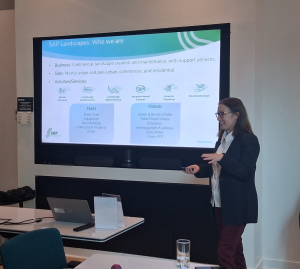
Our speaker: Isobel Fletcher is CEO of Horizon Nua, a not-for-profit foundation based in Dublin working to accelerate the just transition towards a nature-positive economy and manager of the Connecting Nature Enterprise Platform. An advocate for nature-based entrepreneurship, Isobel leads the team working to co-develop nature-positive entrepreneurial strategies at regional and municipal level through multiple European initiatives to support the delivery of nature-based solutions as part of the just transition to an equitable, carbon neutral and nature-positive economy. Isobel is a member of the EC NbS Task forces on the nature-positive economy and communications. 


The European Commission has adopted targeted “quick fix” amendments to the first set of European Sustainability Reporting Standards (ESRS). This is aimed at reducing the burden and increasing certainty for companies that had to start reporting for financial year 2024 (commonly referred to as “wave one” companies).

According to the current ESRS, companies reporting on financial year 2024 can omit information on, amongst other things, the anticipated financial effects of certain sustainability‑related risks. The “quick fix” amendment, which applies from financial year 2025, will allow them to omit that same information for financial years 2025 and 2026.

For financial years 2025 and 2026, wave one companies with more than 750 employees will benefit from most of the same phase-in provisions that currently apply to companies with up to 750 employees. A summary of the modifications can be found here.

Wave one companies were not captured by the “stop‑the‑clock” Directive, which delayed sustainability reporting requirements for companies that report from financial year 2025 and 2026 (so‑called “wave two” and “wave three” companies) by two years. This Directive was part of the Omnibus I package adopted by the Commission in February 2025.

The Commission is working on a broader revision of the ESRS, with the aim of substantially reducing the number of data requirements, clarifying provisions deemed unclear and improving consistency with other pieces of legislation. It is expected that this review will be completed by financial year 2027.

Despite the ongoing delays and simplifications at EU level, assessing and reporting on your organisation’s nature impacts is still a vital and urgent part of any organisation’s long-term strategy – ignoring your dependencies and impacts on nature means ignoring the potential risks, both financial and reputational, to your business as well as the physical risks that damaging and degrading nature does to our planet, society and to your business’s resilience and longevity.

You can be a leader in your field by tackling these issues now – we’ll show you where to start. Sign up to our Nature Strategy Accelerator Programme today – join the Discovery Track for free to learn more – or contact our Business Development Manager Dr Maria Fitzpatrick for a chat on how to get started on a solid Nature Strategy for your organisation. We will be accepting new businesses to our Action and Strategy Tracks now ahead of our 2026 programme of workshops, peer learning and expert one-on-one guidance – email manager@businessforbiodiversity.ie

We are thrilled to announce the opening of memberships for our 2026 Action and Strategy Accelerator Tracks!

Starting in the summer of 2025, we will welcome new members to these cohorts of Irish businesses who are advancing along our Nature Strategy Accelerator Programme – providing a unique opportunity to evaluate your organisation’s readiness for a Double Materiality Assessment (on the Action Track) or to level up to craft a comprehensive Nature Strategy (Strategy Track).

New members will engage in a personalised assessment meeting with the BFBI team, receiving tailored guidance to bridge knowledge gaps and initiate impactful actions within your business.

In 2026, each track will feature three immersive full-day workshops, in collaboration with Deloitte‘s WorldClimate (Action) & KPMG Sustainable Futures (Strategy) Teams, and further personalised one-on-one calls as needed. Together, we’ll tackle key milestones, allowing each business to progress at a pace that aligns with their unique capacity and timelines.

BFBI is supported by National Parks & Wildlife Services. Find out more about the various Nature Strategy Accelerator tracks on our How It All Works page and get in touch with our Business Development Manager Dr Maria Fitzpatrick to discuss the options for your business, including grants aligned with our fees – email today manager@businessforbiodiversity.ie

Would you like to participate in The Business of Nature Positive?

BFBI Business Programme Lead, Dr Catherine Farrell CIEEM is an Assistant Professor of Business & Nature at Trinity College Dublin. This past academic year in Trinity Business School, she and a group of students engaged with businesses from a broad range of sectors in Ireland for a new module, The Business of Nature Positive.

From SME to major legal firms, to real estate to aviation, 34 students worked with 15 businesses to build understanding of their impacts and dependencies on nature, and how they can address nature-related risks, as well as explore opportunities through nature-positive actions. You can read more about the module, which is supported by the Business for Biodiversity Ireland team, here, and sign up after reading the full Expression of Interest document below.

Here are some of the testimonials from the Sustainability Champion Leads that engaged with us this year to inspire you to participate – whether your business is just one person / a small team or large scale, size does not matter:

Engaging with the students through the course was valuable to us as it provided an impetus to tackle the real challenges we must overcome. Coming from outside our domain was also useful as they were able to provide a different perspective. – Jane, Trinity College Dublin.


This was a really rewarding experience. The module was run very professionally and the students’ level of engagement exceeded expectations, as did the output which will be very complimentary to our sustainability strategy around biodiversity. – Neil, Hibernia Real Estate.


Working with our students helped put our efforts and plans into perspective… Their ideas to expand nature-positive businesses – especially their most simple ideas – have inspired. – Patrick, Notre Dame Dublin.


I would definitely encourage any business to get involved, the students have so much knowledge and come with lots of ideas about embedding sustainability. The end report is written specifically for your organisation which was insightful and well written. Overall, a great experience and hopefully the students thought it was useful too! – Dee, Chartered Accountants Ireland.


A very positive experience, as the students were really engaged and interested. I think they learned a lot from this initiative, as did we! – Megan, Native Events.


It has been a great pleasure working with the students and collaborating with Dr Catherine Farrell. Viewing our business from a different perspective has been incredibly valuable. We hope The Shannon Airport Group can continue to collaborate with Trinity College in the future. – Arek, The Shannon Airport Group.


It was a pleasure to work with the students of the Business of Nature Positive module at Trinity Business School under the guidance of Dr Catherine Farrell. The programme provided me with hands-on practical experience … and the resulting report will be a very useful tool in our biodiversity strategy for the future. For businesses that have not yet started evaluating their biodiversity-related impacts, risks and opportunities this is a valuable programme and one I can highly recommend. – Lorraine, A&L Goodbody.

The call for businesses to engage with this year’s student (academic year 2025-2026) is now open – an opportunity for you to learn more about sustainability reporting for your business – read the Expression of Interest PDF linked below with full details of what’s involved below and sign up HERE.

Poster in dark red with white text and logos

Expression of Interest: TBS Nature positive module 4_6_2025

BFBI Business Programme Lead Dr Catherine Farrell CIEEM, Trinity College Dublin, writes on the process steps around undertaking a Double Materiality Assessment (DMA) to help guide your nature strategy: this article focuses on the ways to understand how businesses interface with nature, highlighting the data needs but also the language of a DMA.

Following from our inspiring and interactive workshop on March 10th (read about it here), alongside colleagues from Deloitte, the Business for Biodiversity Ireland team led the second of our Action Track workshop series on May 20th. While our initial workshop focused on the key elements of what a Double Materiality Assessment (DMA) is (and/or isn’t), especially the value chain, this time we focused on how we can map and track the interface of business with nature.

This involves homing in on ‘the where’ part of the DMA process. In essence, this means gathering your organisation’s location data like maps, and – in tandem – figuring out the other types of data available, what they measure and why. Then its time to focus on how we might use data (which may be freely available as well as company-held) to inform our DMA. Our colleagues from Deloitte shared their DMA journey, highlighting how tools like the TNFD LEAP (Locate, Evaluate, Assess and Prepare), can help bring understanding of our business interfaces with nature to light.

In this article we focus more on data and the language of data and DMA (beware of the acronyms!):

Data: we hear a lot about data these days, but when we’re trying to understand our business impacts and dependencies (how we rely on nature) we really need to focus on data relating to aspects of nature referenced in the nature-related reporting frameworks like CSRD, TNFD, SBTN and GRI.

We can start by breaking these into –

  • Locational data (a map of where we operate – note, start with one part of your value chain and get the hang of it!)
  • What types of habitats or ecosystems are present in those places (the basic type and their extent)
  • What our impact is on these specific areas of ecosystem (how we influence their condition), and
  • How we rely on them (what we need from these ecosystems as inputs, aka ecosystem services to our operations) or impact them.

This helps us Locate, Evaluate and Assess our impacts, dependencies, risks and opportunities, and then Prepare to report (think LEAP). We can do this by using available data on habitats, but -now, a health warning – in Ireland habitat data is quite limited. With some ecological input to help, however, we can gather up what is available, in a useful way.

Language: ecological and nature lingo is nuanced but not beyond our reach. It’s helpful to have someone working with us that can communicate these nuances in a clear, simple way. During our workshop we discovered that acronyms and strange ‘eco’ languages can be off putting initially, but once we get into the flow, we find what we need to know.

Many thanks to Aoife Connaughton and Deloitte for collaborating on this workshop, National Biodiversity Data Centre’s Sarah Kelly, and all our Action Track businesses for participating in our Nature Strategy Accelerator Programme, including CIE and CIE Tours, Cloud Assist, Irish Rail, Irish Trees, Future Energy Ireland, KMK, Scott Cawley Ltd, Shannon Airport, Trinity College Dublin and Watermark Coffee.

Dr Catherine Farrell, Assistant Professor in Business and Nature in Trinity Business School and BFBI’s Business Programme Lead, is co-ordinator of a module for final year business students with learnings on nature, society and economy. The module, the development of which was supported by BFBI, is called The Business of Nature Positive and explores ways for undergraduate students to work with businesses in Ireland to support the global Nature Positive Initiative. We are delighted to share guest articles on a number of associated course topics, beginning with the role of green bonds in sustainable finance.  

In this extract, Ms. Meadbh O’Mahony, Senior Sophister student in Global Business in Trinity Business School, explores why these bonds are insufficient on their own to halt biodiversity decline; while highlighting the important role they must play a nature-positive future: 


Bridging the Biodiversity Financing Gap: Why Green Bonds Are Not Enough 

‘The planet’s rich web of life is unravelling, with ecosystems deteriorating at an alarming pace due to human-driven pressures. The UN’s Intergovernmental Science Policy Platform on Biodiversity and Ecosystem Services (IPBES) reports that 75% of terrestrial environments and 66% of marine ecosystems have been significantly altered by human actions, driven by deforestation, pollution, climate change and unsustainable resource extraction (Natixis, 2024). 

Graph with pink and green hues

The World Economic Forum estimates that $44 trillion, over half of global GDP, is moderately or highly dependent on nature. (Deutz A, et al, 2020). Despite the urgency of the crisis, current biodiversity financing falls far short of what is needed to reverse ecosystem degradation.

Despite significant progress being made in climate and sustainable finance, with green bonds channelling nearly $600 billion into environmental projects in 2023 alone (Popoola et al. 2024), they have largely focused on climate mitigation projects, such as renewable energy and carbon reduction and overlooked biodiversity. 

In response to this imbalance, the financial industry is evolving beyond traditional green bonds and to a new generation of financial instruments, biodiversity bonds…’

Read the full article here: Bridging the Biodiversity Financing Gap – Meadbh O’Mahony 


Business for Biodiversity Ireland is delighted to announce the newest member of our team, Dr Maria Fitzpatrick, who has taken on the role of Business Development Manager, working with Irish businesses to ensure they get the most from their membership of BFBI.

Biodiversity & Sustainability Consultant Maria has a PhD in Freshwater Ecology and worked as an Environmental Consultant before moving to Queen Mary University of London and then on to the Royal Botanic Gardens, Kew to build and head the Research Funding Services for Kew Science.

She is Circular Economy-trained with a Corporate Sustainability Reporting Directive professional qualification. Her background blends scientific expertise with project and relationship management skills, and a keen understanding of the environmental challenges our world is facing to build compelling cases for change. Maria also sits on the steering committee for Natural Capital Ireland.

Maria shared:

“I am excited to be working with the brilliant team at Business For Biodiversity Ireland to help shape and drive forward our 2025 business development strategy. This will be working to bring businesses on board with our Nature Strategy Accelerator Programme, supporting businesses in the transition to achieving a thriving nature-positive economy here in Ireland and beyond.”

You can contact Maria with queries at manager@businessforbiodiversity.ie

Minister of State for Nature, Heritage and Biodiversity, Christopher O’Sullivan TD, has launched the Biodiversity Duty Reporting Guidance for Public Bodies, developed by the National Parks and Wildlife Service with support from Business for Biodiversity Ireland.

The guidance provides practical steps to help public bodies fulfil their ‘biodiversity duty’ – a new legal requirement for public and state bodies to consider biodiversity in their decision making and daily operations.  The guidance will also assist public bodies in fulfilling their biodiversity reporting obligations.

Launching the guidance documents to be issued to all listed public bodies, Minister O’Sullivan, pictured right, above with the BFBI team, said: “All of us have a role to play in protecting our biodiversity, and that includes our public and state bodies. Many of them, including ESB and Iarnród Éireann, are already leading by example and can see the benefits – for biodiversity, for the public and their own organisations.

“This guidance will help even more of our public bodies to make a commitment to biodiversity. It suggests areas of business activities within public bodies, from procurement, to construction, landscape management and organisational development, which can have a real impact on our biodiversity. It will also support public and state bodies to report on their progress over the coming months as required by the legislation.”

Biodiversity Duty Reporting Guidance for Public Bodies provides actionable steps and tools for public bodies to embed biodiversity considerations into their operations. It indicates areas of opportunity within public bodies where biodiversity can be incorporated, and sets out how biodiversity duty can be strengthened through clear targets, knowledge and skills development, collaboration and implementation.

The ESB is a member of the Business for Biodiversity Ireland platform, and has been working to develop a Nature Strategy in response to the recognised growing need for business guidance in transitioning to a nature-positive way of working.

Geoff Hamilton, Biodiversity Lead at ESB, pictured left, above, said: “Biodiversity action is a core part of ESB’s ambition to make a difference for planet, place and people; we aim to be nature-positive by 2030. In 2024, ESB appointed a Group Head of Sustainability, who has completed the establishment of a new Centre of Sustainability – including the creation of a new role of Group Biodiversity Lead, tasked with driving biodiversity action and transformation across ESB’s business units.

“We have recently published the ESB Networks Biodiversity Strategy ‘Networks for Nature’ and are currently in the process of developing similar strategies for other constituent business units of ESB. ESB wholeheartedly welcomes this new guidance document, which provides clear directions with regard to our annual reporting duty.”

Read more on the government website HERE and access the guidance document HERE.


Pictured, L-R: Geoff Hamilton, Biodiversity Lead, ESB; Fiona Smith, Communications, BFBI; Dr Emer Ní Dhúill, Research at BFBI; Iseult Sheehy, Operations, BFBI; Sinead Kilkelly, Executive Director, People & Sustainability, ESB; Dr Maria FitzPatrick, BFBI Business Development Manager; and Minister for Nature Christopher O’Sullivan TD.

Following from our kick-off Strategy Track workshop in January where we focused on the key elements of what a Nature Ambition Statement is (and why every organisation should have one!), BFBI Business Programme Lead Dr Catherine Farrell CIEEM, Trinity College Dublin, writes on the next workshop for our businesses on this track – where we outlined how to set SMART nature targets to underpin businesses’ nature strategies.

In our first workshop, we outlined the business need for a deep understanding of impacts and dependencies on nature, and importantly, where these occur along the business value chain. Focusing on our greatest impacts and dependencies on nature is an effective first step towards setting targets to both reduce the impacts, and – critically – to reduce potential financial risks and leverage opportunities at the same time. Risks arise when we are dependent on ecosystem services (also referred to as ‘nature’s contributions to people‘), but the continued flow of those services (perhaps from upstream in our value chain, as in the provision of raw materials), might well be reduced due to an affect beyond our control (think changing weather patterns on crops, for example).

Specific, Measurable, Attainable, Relevant and Time-bound nature targets
And so, armed with this understanding of our value chains, we worked through the process of setting SMART (Specific, Measurable, Attainable, Relevant and Time-bound) nature targets for the businesses present at our workshop. We covered some key elements such as: targets can be generic, broad, and/or highly specific; they can be action- or outcome-focused, short or long-term, but they must always relate to the value chain. Importantly, if we are to set SMART targets, they must be resourced and matched by indicators to track progress. Thankfully, there is a range of useful guidance out there, such as the WWF Corporate Nature Targets publication, and the Science-Based Targets Network framework (with lots of great resources and videos).

As previously, we followed the guidance for the accelerator programme for businesses as set out by Business for Nature under the Commit phase of their ACT-D framework.

Setting targets may seem daunting, but if we focus on one aspect of our value chain to start with, and work through the process, then this builds familiarity and confidence in the process. At our next workshop for this track later in the year, we will focus on how to monitor, evaluate and disclose progress towards our nature targets, and how they link to other sustainability targets.

The team at Business for Biodiversity Ireland wish to extend our gratitude to Thomas Ball and Ellen Cunningham, of the KPMG Ireland Sustainable Futures Nature & Land Use Unit for supporting us in delivering this workshop. Thanks also to our host Geoff Hamilton and ESB for looking after us at their Fitzwilliam Square Head Office in Dublin. Many thanks to our associates in the National Biodiversity Data Centre and Business in the Community Ireland, and to all the businesses in our Strategy Track including An Post, ESB, Bank of Ireland,  Bus Éireann, Cairn Homes, Glenveagh Properties, Gas Networks Ireland and SAP Landscapes for doing this important work with us.

Group of people in a boardroom, some kneeling to fit in the frame

Business For Biodiversity Ireland is delighted to be named as a finalist in the Business & Finance Media Group ESG Awards 2025 – in association with Grant Thornton Ireland – in the ‘Biodiversity Leadership in Business Award’ category.

The awards recognise the efforts of companies in Environmental, Social, and Governance (ESG) practices, and celebrate those driving change through innovative policies, technology solutions, and sustainable business practices.

Congratulations also to our fellow nominees Wildacres, Biodiversity In Schools, Coillte and Dublin Port Company and to all the nominees across categories including An Post, Dublin Port Company, Bord Gáis Energy and Aldi.

The ESG Leader Award will be presented to Mary Robinson, recognising her dedication to sustainability, climate justice, and social equity on both a national and global scale.

Tracey Carney, Managing Director, Business & Finance, said: “The calibre of entries for the 2025 Business & Finance ESG Awards reflects the remarkable strides taken by organisations across Ireland in integrating sustainability at the core of their business strategies.

“We are seeing a significant shift towards collective responsibility, where entire teams are driving change and delivering measurable ESG impact.”

The winners will be announced in a ceremony on April 10 in The Mansion House, Dublin.

Read more on the Business & Finance site.
Read more on RTE News.