
COP17 campaign brings progress on incentive reform
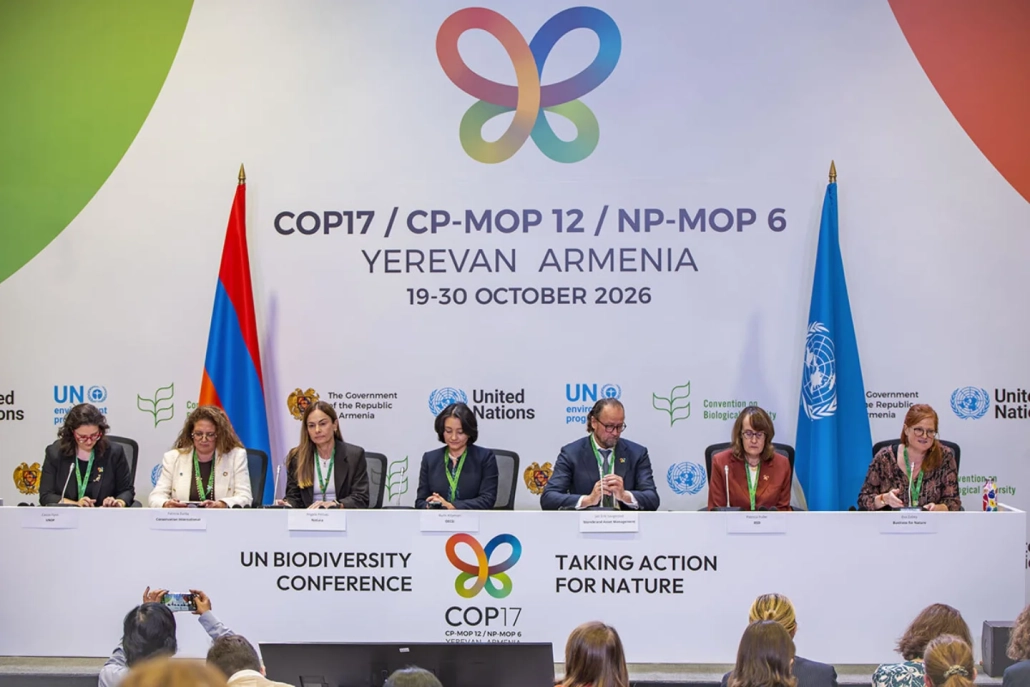
The global biodiversity summit known as COP17 (the 17th Conference of the Parties to the Convention on Biological Diversity), hosted in Yerevan, Armenia from 19–30 October 2026, produced several significant developments, including progress on incentive reform, following a concerted campaign.
Ahead of COP17, BFBI supported the Business For Nature-led campaign, with more than 130 businesses and financial institutions signed an open letter urging governments to accelerate incentive reform, and launch multi-stakeholder national reform processes. The campaign was referenced throughout the conference, as business and finance leaders met for bilateral talks with governments to discuss the issue. How can we expect to meet biodiversity targets while continuing to spend hundreds of billions rewarding activities that undermine them?
To build nature-positive economies, public incentives must start working with and for nature rather than against it.
The COP17 Presidency launched IISD – Yerevan Call on Incentives Positive to Biodiversity, supported by CBD, IISD, OECD and UNDP’s Biodiversity Finance Initiative (BIOFIN) which aims to reform or repurpose harmful public expenditure and redirect resources towards positive biodiversity outcomes.
BFBI director Edward Pollard, of the UK Business & Biodiversity Forum, was in attendance at the summit as the Yerevan Pathway, intended to accelerate implementation of the Kunming–Montreal Global Biodiversity Framework (KMGBF) by 2030, was negotiated by world leaders, with close to US$2 billion in additional biodiversity-related funding mobilised.
Better biodiversity data is essential for measuring whether countries are actually achieving their conservation targets, so the Yerevan Tech for Biodiversity Monitoring Hub, led by the Armenian COP17 Presidency, the CBD Secretariat, FAO and IUCN, with support from the Global Environment Facility (GEF), was another welcome development.
Biodiversity frameworks updated
Major biodiversity guidance and frameworks publication updates were launched including the Taskforce on Nature-related Financial Disclosure, the Science-based Targets for Nature and the Nature Positive Initiative, releasing aligned updates on the same day, October 13. These offer a more interoperable biodiversity measurement system, as we assess corporate impacts and dependencies and setting targets using more consistent underlying indicators.
TNFD – upgrade of the LEAP assessment
NPI – State of Nature Indicators and Metrics: publications
Meanwhile the State of Biodiversity Action, Global Report in Collective Progress was published by the CBD, a global stocktake of progress towards the 23 targets of the Kunming–Montreal Global Biodiversity Framework. Key findings show that nearly 90% of countries have established national biodiversity targets but fewer than half of the assessed national targets are on track, with significant gaps in biodiversity finance, implementation and monitoring with greater integration of biodiversity into economic and government decisions is needed.
With the move to reform fiscal and financial incentives, biodiversity awareness and action will shift further into the economic mainstream, with policymakers and financial institutions agreed that public money should support nature, people and economic resilience.
Our colleagues at Business For Nature published some key takeaways from the summit HERE, highlighting the need for greater urgency, leadership and collaboration to bridge the implementation gap for biodiversity restoration.